Get your work reviewed!
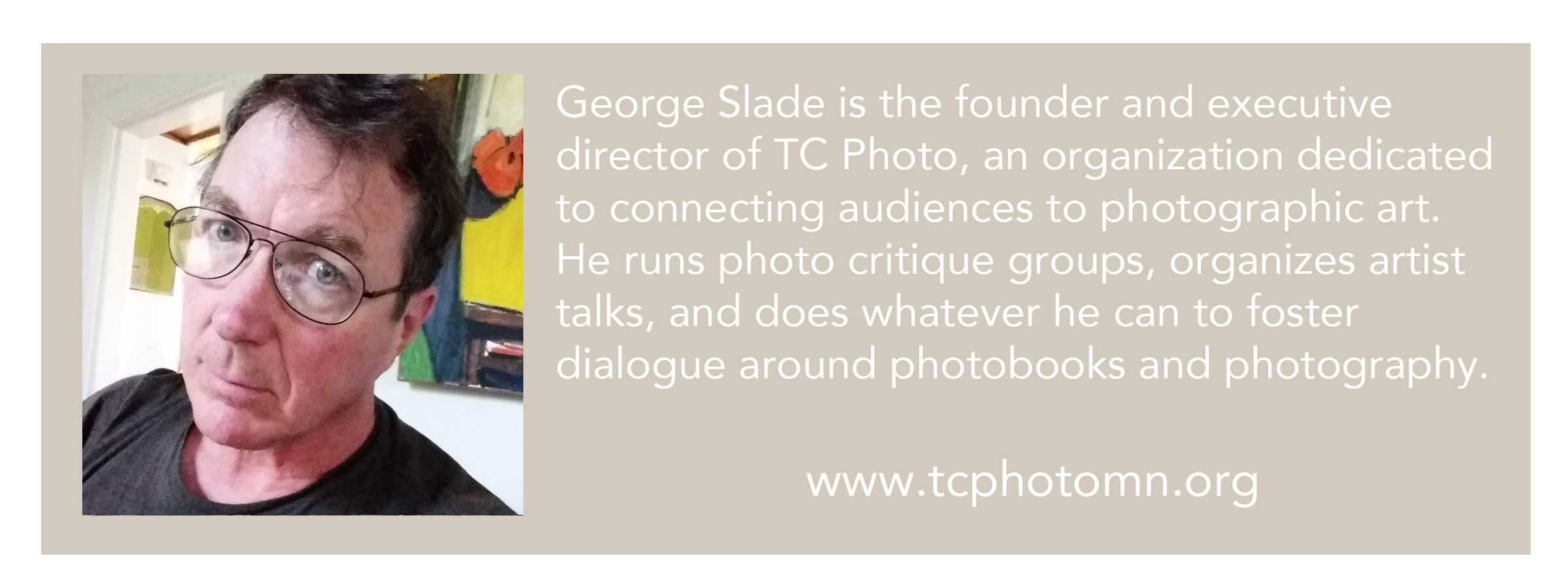
I’ve known George Slade for many years. He’s a photography curator, writer, historian, and consultant—but what stands out most is his gift for helping artists find meaning in their own images.
Critiques can feel intimidating. Sharing work that comes from the heart often brings vulnerability, and it’s never easy to hear what others think—good or bad.
But George approaches critique differently. He asks thoughtful questions, digs into the why behind the work, and helps photographers uncover deeper purpose and intention. Instead of a one-way evaluation, he sees critique as a collaborative, reflective process.
I’ve invited George to share his thoughts on the in-person review experience and what makes it so valuable for artists.
+++++
Clare and I have been involved with a few visual arts organizations over the past two decades. Whether for-profit or not, these organizations are at their best when they function as true centers—the place you can go to literally “center” your interest in a medium and be confident that you will find substantive, edifying material—workshops, lectures, photobooks, group meetings, film screenings, or informal gatherings of photographers. You won’t like everything you see, but you can always count on seeing something.
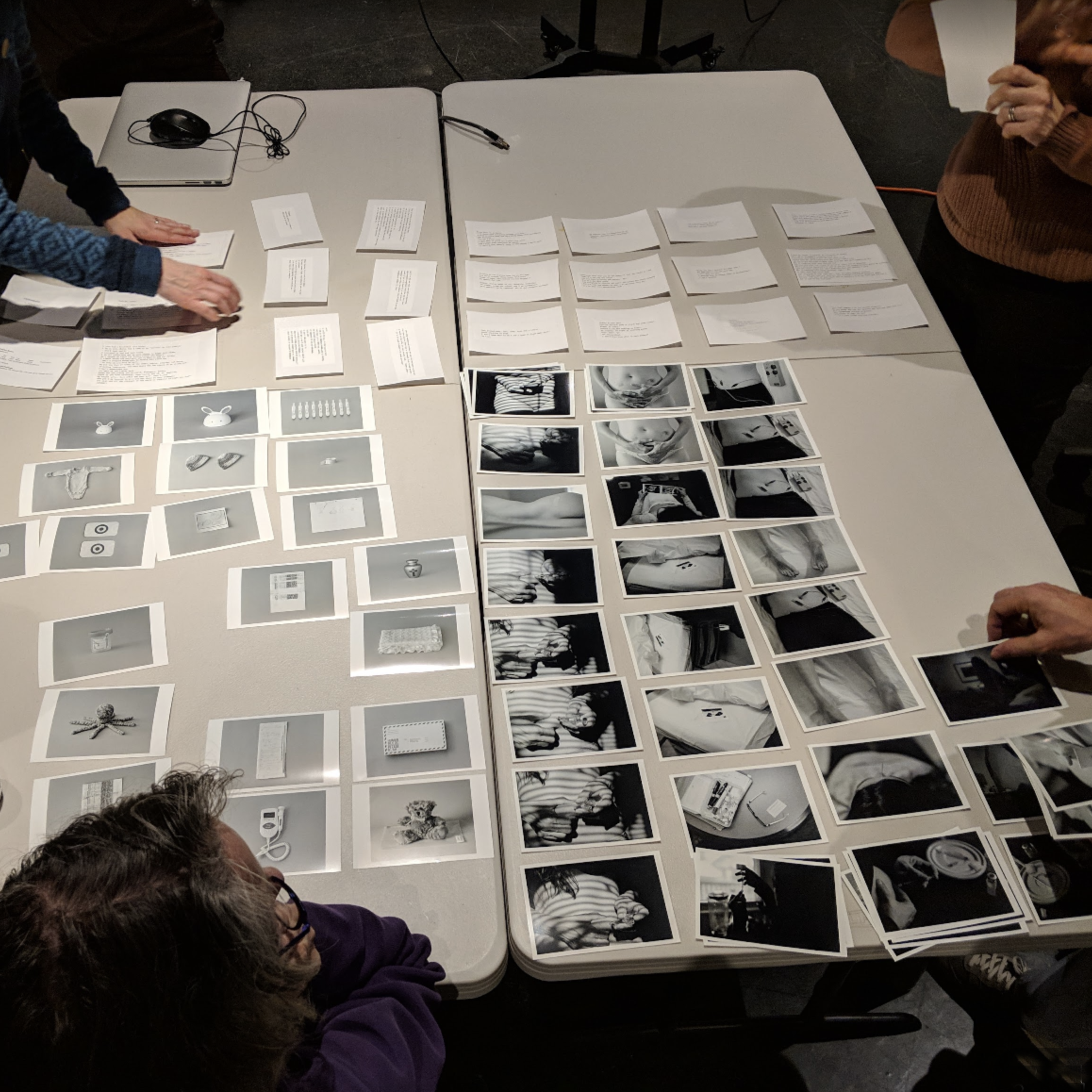
My experience is that the best of these exchanges happens in person, in real time, and around meaningful, physical objects. I like to call these decidedly analogue moments “shared breath” encounters. A table covered with prints (or photoencaustic paintings) and surrounded by a half-dozen supportively critical colleagues is the best; sharing and chatting about photobooks is a close second.
Clare endorsed this phenomenon in her January 28 post, “My ‘Aha’ Moment.” In fact, her creative endeavor on the whole underscores the importance of being within arm’s reach of photography, near works that one can see face-to-face, not muted behind glazing. As she wrote, “I wanted something that I didn’t have to put behind glass. Something more organic, something that I could touch, feel, and smell.”
What a difference this multi-sensory approach makes in one’s appreciation of the medium. The greatest virtue of the critique groups I run is that they amplify this pleasure. Two-dimensional objects take on substance when shared among fellow artists. I said earlier that these gatherings are “supportively critical”; yes, feelings can and do emerge, and opinions are voiced, but always in respectful terms, with the underlying knowledge that everyone will see each other again next month. Art is very personal stuff, after all, and it takes a couple of sessions before participants gain each other’s trust.
As the facilitator, I try to guide the conversation toward constructive commentary. When I find myself becoming glib or sarcastic I stop talking and let others carry on the discussion, knowing that my own observations are as fleeting and subjective as anyone else’s. I reflect on where we’ve been in discussing someone’s past efforts, and what might be gainful going forward. I don’t make assignments, rather I make recommendations and the occasional request if I’ve seen something that piques my curiosity.
It’s an unpredictable process. I approach each encounter with an open mind and assume best intentions all around. Each meeting is dynamic, and each group finds its own path. I just facilitate two way conversations and help the artist see what others see in their work.
I’m curious to know, what has been your experience with review sessions?
Be well….be creative,
Clare
Learn how photographs, wax, and intuition come together.
View my photo encaustic classes, courses, and workshops.
Clare – thank you for another great topic and bringing in your guest blogger. As an introvert, it would be a great challenge for me to find a local critique group – and I have no doubt the rewards would be considerable.
Best regards, Gail
Hi Gail, I get it. It isn’t always the easiest thing to do….even for an extrovert. But as you mentioned, the rewards are indeed considerable.