Please allow me a small—okay, maybe not so small—rant.
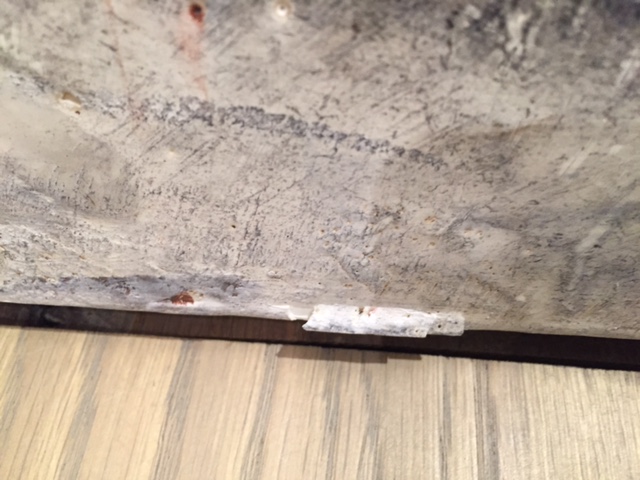
Yesterday I stopped into one of my galleries to pick up my artwork, and what I walked into left me absolutely stunned. And frustrated. And honestly, deeply disappointed.
You know I’m all about relationships. I value galleries, I value the role they play, and I work hard to create strong, respectful partnerships. But if any gallery owners are reading this, hear me when I say this…..Please treat your artists and their work with the same care and respect we give you.
We pour ourselves into our art. We ship it with professionals. We package it meticulously. We honor it. And we trust the gallery to do the same.
When I arrived my work was leaning against a wall, stacked, unprotected, and separated only by a flimsy piece of cardboard. (Which—if you work in encaustics—you know is not an acceptable surface protector.)
When I asked if they had packing material, I was met with, “Well…did they come with any packing material?”
Yes. Yes, they did. Because they were shipped professionally.
Then I saw the damaged piece. The assistant barely looked at it, rubbed her hand across the surface of it, and declared it “fixed.”
(It wasn’t.)
And when I asked for the sales material that accompanies each piece? Another blank, confused look.
But what followed was the real shock. The gallery owner texted me to defend the situation, even quoting me—incorrectly—about encaustics separating due to climate. (They don’t. The layers are fused; that’s the whole point.)
A simple, honest:
-
“Oh my gosh, I’m so sorry.”
-
“How can we make this right?”
-
“Can you repair it?”
…would have changed the entire tone of the day.
Instead, once the work was off the wall, it suddenly seemed to have no value to them at all.
The good news is that I can easily repair the piece. My “lovelies,” as I call them, are headed to Canyon Ranch in the Berkshires—which is much more aligned with where they belong.
But this experience lit a fire in me, and I want to turn this into something useful for you.
If You’re New to Gallery Representation—Read This Twice
Don’t jump into gallery relationships just because you feel flattered.
Do your due diligence. Protect your work. And protect yourself.
Before you say yes to a gallery:
-
Are they financially stable? What happens if they declare bankruptcy?
-
Do they carry proper insurance for your artwork?
-
Do they understand encaustic and how to handle it correctly?
-
Do they respond promptly and professionally?
-
Do they promote their artists through newsletters, postcards, or social media?
-
Will your work go on their website?
-
Who pays for shipping—and how will returns be handled?
-
How do they pack artwork for storage or return?
-
What happens if the work is damaged?
-
Do you genuinely like the people running the gallery
And most importantly….does this relationship feel aligned??
If the answer is no, walk away. You deserve better.
The bottom line is that gallery relationships can be wonderful—truly. Just don’t step into them as a starry-eyed artist. Step into them as a businessperson.
It’s your art.
Your investment.
Your voice.
Your heart.
Make sure the places you entrust it to honor that.
I’d love to hear from you in the comments below. Tell us about your best experiences when it comes to gallery representation?
Be well….be creative,
Clare
Learn how photographs, wax, and intuition come together.
View my photo encaustic classes, courses, and workshops.
Clare: thanks for this. Good advice, for sure. The quality of the experience aside, I am always struck by how time consuming it is to market one’s art work.
You are very welcome Greg. You are completely right, it’s a very time consuming process to market artwork. But there is no better feeling to know that someone loves your work so much that they want to live with it every day:)
Claire, thank you for your rant this morning. I understand your frustration entirely and how a bit of empathy from the gallery could have diffused it. I find this behavior rampant in society today and I just don’t get it. Your insights into making and building a relationship with a gallery are invaluable and the questions went beyond any I would have thought to ask. So thank you!
Thanks for your comment Donna. The best advice I ever received is from a salesman who told me it’s my job to make every customer feel like they are the only customer I have. I think that can be extended to every relationship. It doesn’t take much effort to treat people well.
Clare, so sorry to hear about your experience but it seems that is kind of the norm I am finding out. Recently I had 6 pieces of my work in a gallery. A friend of mine e-mailed me one morning saying he had been at the gallery and noticed one of my “plates” (ambrotypes) was missing from the frame and had I sold it. I contacted the curator as I doubted it had been sold. She got back to me with the story that the plate had “fallen away” from the velcro holding it to the frame. Well . . . these pieces have hung for hundreds of exhibition hours with never a problem. The curator told me she adhered the plate back on the velcro and now it is so tight it will never come off. And this is my point, the velcro used is so strong I do not believe the plate could have separated by itself without someone tampering with it. But both her and the gallery feel everything has been righted even though there are scratches on the plate. Unfortunately, nothing can be proven so it is what it is. As you said . . . be very diligent in choosing galleries/curators that represent/curate your work and respect you and your art..
That’s horrible Jeannette……but it does seem more the norm these days.
Thank you for taking a negative experience and helping others to become more aware and enlightened. I hope at some future date to become a student.
Hi Karen, thanks. Would love to have you as a student someday…..when the time is right for you:)
Well, it is about power. They clearly do not value their artists and believe, being further up the food chain, they do not have to. Life is too short for people like that.
Curious about suggestions for packing and storing encaustic. The fact that it sticks to stuff and is soft raised issues that I normally do not have with framed photographs.
Hi Chuck. Thanks for your comment.
Here is a good resource about packing encaustic pieces. http://www.rfpaints.com/resources/encaustic/item/421-caring-for-and-shipping-work-in-encaustic
Have dealt with this myself. Funny enough, have only had this problem at galleries, not at other places where I have hung work. If you can, try to be there when the work is taken down. It’s frustrating but staff is more likely to treat your babies with respect if you are standing right there.
Good advice Marc…..I do believe it’s always better to be there in person, but alas, that can be hard when it’s not local:)
As an artist and a former gallery owner I appreciate your rant. It is warranted. Gallery owners should always treat their artists’ work as if it was their own – and make sure their employees do the same. I also like your list of questions/suggestions, I should have had some of them in my artist/gallery consignment agreement. Thanks for posting this rant – it is real life in the art business world.
Thanks for your insights Bob……it’s a soapbox that I frequently get on in personal discussions……and I really do believe it’s an important one. I used to work in the b2b credit world and we would never consider shipping product on credit without doing some due dilligence on the company. But artists aren’t thinking about it that way…..and we should all be.
I took some of my photography work to a gallery about 75 miles away for consideration for exhibit at their next showing. They liked my work and said so but they also commented that because I had some images of “people” in my work that it would never sell as their customers only bought images of people that they knew.
I said “really” and left never to hear from them again. I have a lot of my photos that I have sold hanging in small businesses etc. and one of my best selling pieces is of several young men leaning over the hood of a older car ie. ,1950’s driveway at home with a bunch of friends looking at an engine.
Anyway I never went back nor would I allow them to handle any of my work. I don’t need snobs or deal with snobs. I only hang with people who have the same values that I have. No matter what, I don’t need business from folks who think they are one level above me or my other friends who are photographers.
I know you asked for “positive” gallery comments but I just couldn’t resist posting this.
Hi Ron, thanks for your comment.
I’ve found that galleries create a niche in which to sell work and some galleries don’t have the clientele that will purchase work with people in it and other galleries that is what sells best. It all depends on the gallery and their customer base. There is no doubt it’s a harder market, but not impossible:)
They said that to brush you off. I have found that galleries would make any excuse that makes no sense to make you go away!